Architecture
Modular, event-centric services for zone trigger detection, eligibility gating, fraud safeguards, and payout automation.
Event-Centric Core
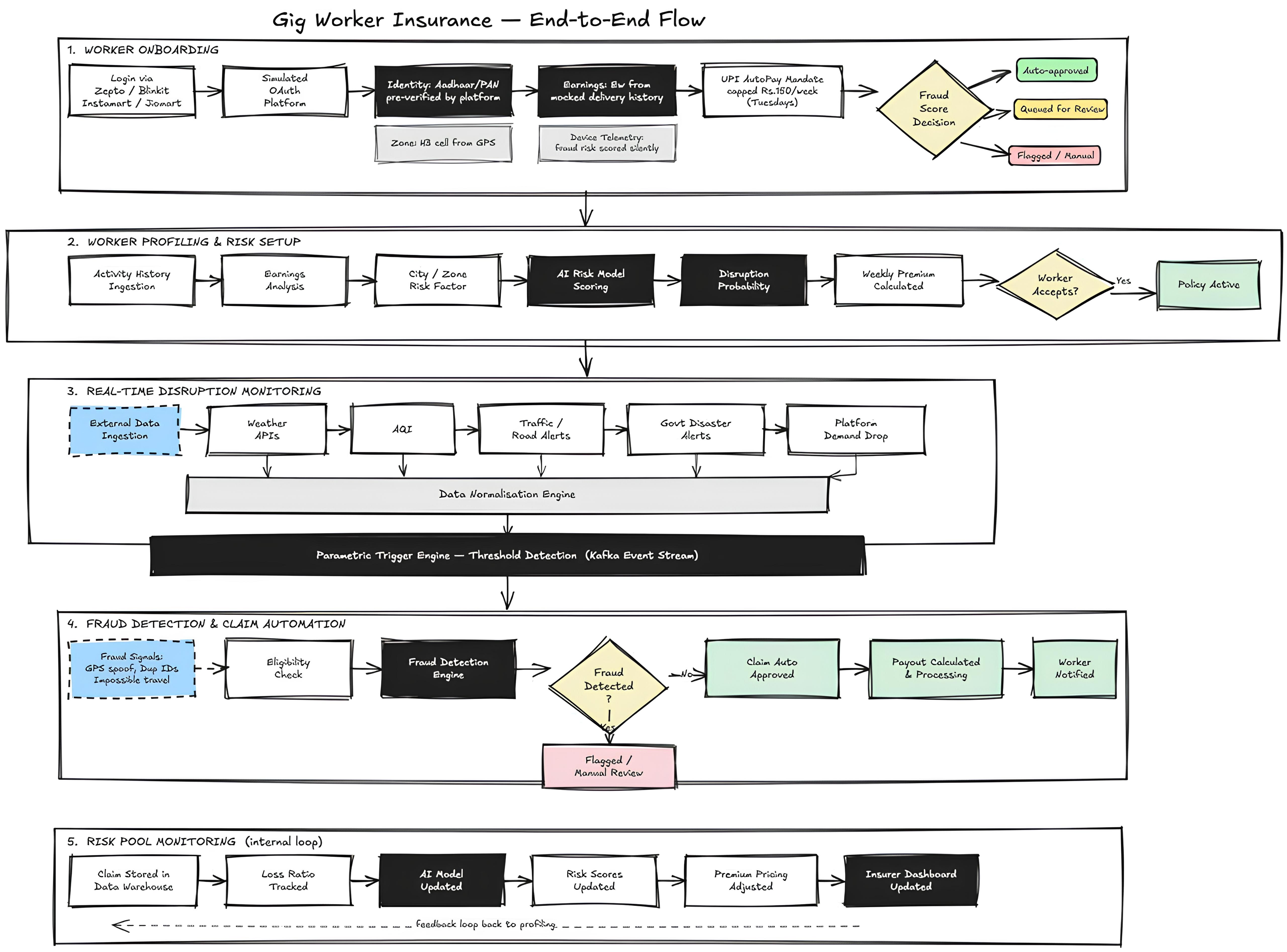
Aegis runs on a simple event loop:
- External signals are ingested (weather, AQI, alerts, platform feed)
- Signals are normalized into zone/time facts
- A trigger engine evaluates each active H3 cell
- When a zone is HALTED, a
DisruptionEventis emitted - Claim engine verifies eligibility; fraud engine gates auto-approval
- Payment + notification complete the payout journey
- The risk pool receives feedback for model calibration
Logical Services (High Level)
| Service | Role |
|---|---|
| API Gateway | auth, routing, rate limiting |
| Identity Service | simulated platform OAuth; produces rider baseline signals |
| Worker Profile Service | city/zone attributes and platform affiliation state |
| Policy Service | tier activation; weekly premium computation and payout rules |
| Ingestion Layer | external feed aggregation and normalization pipeline |
| Parametric Trigger Engine | deterministic threshold evaluation per H3 cell |
| AI Risk Engine | predicts Lf and supports disruption forecasting |
| Claim Engine | eligibility checks and payout calculation |
| Fraud Detection Service | hybrid rules + anomaly models; prevents payout gaming |
| Payment & Notification | Razorpay/UPI payout + FCM/SMS/WhatsApp updates |
| Risk Pool Service | tracks loss ratio; supports margin/tier recalibration |
Why This Shape Works
It optimizes for:
- speed (trigger-first, not claim-first)
- explainability (audited deterministic checkpoints)
- operational control (idempotent claim handling + gating)
Reliability Principles
- deterministic trigger thresholds
- idempotent claim processing
- zone/time audit logs for explainability